
Kyle Falkenhagen
SVP, Product Management
Sophos Inc
Presenter

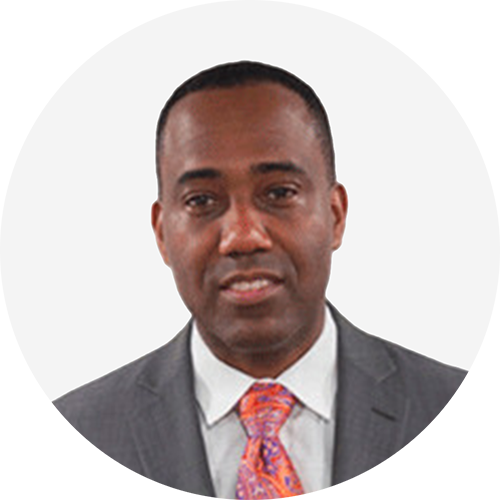
Howard Whyte
CISO
CRC Group
Discussion leader


Chris Hanz
Vice President- Technology
Tepper Sports & Entertainment
Discussion leader


Jerry Fowler
CISO
Krispy Kreme Doughnuts
Discussion leader



October 2026
Agentic AI is rapidly reshaping security operations, automating triage, investigation, and response at scale. As routine work shifts to machines, organizations risk losing critical skills, judgment, and institutional knowledge. CIOs and CISOs must decide what to automate, what to preserve, and how to evolve roles and operating models — while leveraging AI to extend security expertise beyond traditional boundaries.
CIOs and CISOs in our Charlotte Community gathered recently for a Town Hall to discuss how agentic AI is reshaping Security Operations Center (SOC) roles, workflows and career paths. Kyle Falkenhagen, SVP, Product Management at Sophos Inc, moderated the discussion. Governing Body Members Howard Whyte, CISO at CRC Group, Chris Hanz, Vice President – Technology at Tepper Sports & Entertainment, and Jerry Fowler, CISO at Krispy Kreme Doughnuts led the discussion groups.
IT and security executives discussed how organizations can preserve critical cybersecurity skills while they are simultaneously redesigning roles to balance AI-driven automation with human judgment, accountability and leadership at scale.
These are the highlights of the discussion:
- Agentic AI is reshaping the future of security operations
Agentic AI is reshaping the SOC by taking on more repeatable, lower-level work and enabling defenders to respond at the speed, scale and scope of modern attacks. Executives in the discussion noted that attacks are increasingly executed at machine speed, AI is making sophisticated attacks more accessible, and the attack surface continues to expand. With these challenges, one executive said, “Defenders have to think differently because of the speed of developing attacks.”
As attack timelines compress, security teams must rethink both how they detect and respond to threats and how they divide responsibilities between AI agents and human professionals.
- Human judgment remains essential to effective security operations
The central challenge for CIOs and CISOs is that automation does not eliminate the need for human judgment – in fact, according to the participants in the discussion, it raises the importance of judgment. One executive suggested evaluating each workflow through three practical questions: How confident are we in the system’s determination? Is the action reversible? And who is accountable if it is wrong?
Analysts will increasingly need to supervise AI, identify false positives and “slop,” and provide the context and leadership that automated systems cannot. As one CISO observed, “Watching the system is a critical component of the SOC of the future” – but organizations will need to redefine what effective oversight looks like.
- Organizations must rethink how they develop junior talent
This shift in responsibilities creates an urgent talent and career-development question for IT and security leaders. AI is increasingly taking on the tasks that have traditionally helped junior associates learn SOC responsibilities and build experience. As one executive asked, “How do they learn judgment?”
If those opportunities disappear, CIOs and CISOs suggested that organizations must deliberately preserve time for hands-on learning, experimentation and failure – or, the “scars” that build judgment, as one CISO noted. Participants emphasized the risk of skill atrophy, particularly for newer generations who may rely on tools that rarely fail and therefore have fewer opportunities to develop instincts.
Building the next generation of cybersecurity talent will require structured enablement, deliberate practice and new career paths centered on supervising, challenging and improving AI-enabled workflows. Otherwise, as one executive noted, “Future generations won’t have the scars of experience of those who have done security for decades.”
Finally, executives in the discussion highlighted that AI adoption and risk ownership extend beyond the SOC. Organizations are at different points in their adoption journeys, with varying levels of tooling, training, policy and governance. While some teams are embracing AI quickly, IT and security leaders report that others remain hesitant, creating a bifurcation that they must actively manage.
For CIOs and CISOs in the discussion, the long-term priority is to maintain meaningful human accountability and operational resilience, while using AI to operate at the speed required by today’s threat environment.
To collaborate with your CIO and CISO peers on agentic AI, security talent and other timely security issues, apply to join a CIO or CISO community. If you are already a community member, sign in to the app to find upcoming opportunities to get together with your C-Level peers.
Hosted by Sophos.
By CISOs, For CISOs®
Find your local community and explore the benefits of becoming a member.